Overlapping Toe Treatment at Foot and Ankle Rehabilitation
Overlapping toes often accompany bunions or flat feet, creating rubbing, corns, and shoe intolerance. Flexible overlap can stiffen without targeted offloading and alignment.
At Foot and Ankle Rehabilitation, we separate and protect toes with silicone devices, optimise shoes, and correct mechanics using custom orthotics and stability work. For fixed or painful overlap, we arrange imaging and timely orthopaedic input.
What are Overlapping Toes?
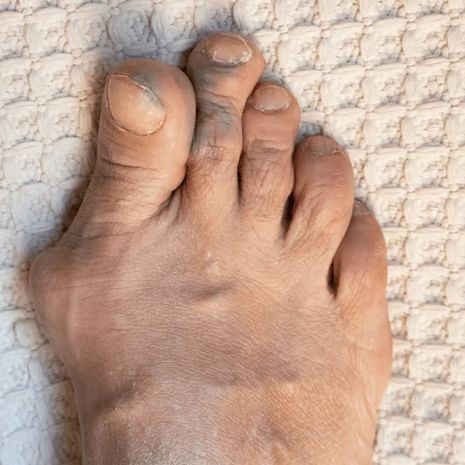
Overlapping toes occur when one toe crosses over or under another, creating misalignment and crowding. The most common presentation is the second toe overlapping the big toe, often associated with bunions (hallux valgus). However, any toe can overlap due to structural deformity, congenital positioning, or progressive biomechanical changes.
Overlapping toes can lead to pain, footwear difficulties, corns, calluses, and secondary joint deformities. At Foot and Ankle Rehabilitation, we provide specialist assessment and treatment, focusing on both the cosmetic appearance and functional pain relief.
Causes & Risk Factors
Bunions (hallux valgus): drifting of the big toe pushes the second toe into overlap
Flat feet or hypermobility: instability increases risk of crossover deformities
Genetics: congenital overlapping toes may be present from birth
Footwear: tight, narrow, or high-heeled shoes crowd the toes
Muscle imbalance: weak intrinsic foot muscles, overactive flexors/extensors
Arthritis: rheumatoid arthritis and osteoarthritis can deform multiple toe joints
Trauma: poorly healed toe injuries or fractures
Age: increased risk with long-term biomechanical stress
Treatment at Foot and Rehabilitation
Footwear advice – wide, deep toe box shoes to reduce pressure
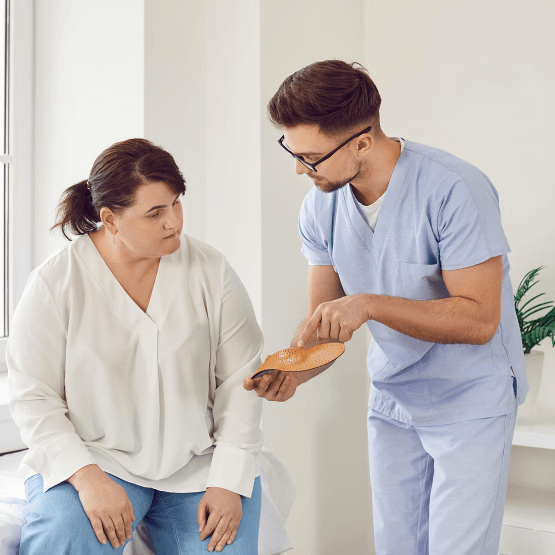
Custom orthotics – control biomechanics, offload painful areas, and slow deformity progression
Padding & silicone separators – reduce friction and prevent rubbing between toes
Exercise therapy – strengthen intrinsic muscles, improve foot stability
Manual therapy & mobilisation – maintain flexibility in early deformity
Corn and callus management – regular podiatry care for pain relief
Splints or strapping – toe alignment devices may help in flexible cases
Referral for surgery – severe or rigid overlapping toes may require tendon release, osteotomy, or joint fusion
Symptoms
One or more toes crossing over or under an adjacent toe
Pain or aching, particularly in footwear
Corns or calluses forming where toes rub together or against shoes
Redness, swelling, or inflammation at pressure points
Difficulty fitting into shoes comfortably
Secondary conditions such as hammer toes, bunions, or metatarsalgia
In severe cases: rigid deformity with fixed overlapping position
Diagnosis
At Foot and Ankle Rehabilitation, diagnosis includes:
Clinical examination – alignment, flexibility, corns/calluses, shoe pressure sites
Biomechanical assessment – gait analysis, arch profile, joint range of motion
Footwear review – contribution of shoe design to crowding
Imaging (if required):
X-rays – assess deformity severity, bunion association, arthritis changes
Contact us to learn more about Overlapping Toes treatment
If you are dealing with Overlapping Toes, our team can help you find the most suitable Foot and Ankle Rehabilitation clinic for assessment, diagnosis, and treatment support.
Whether your symptoms are affecting walking, running, exercise, or daily comfort, we can guide you towards the right clinician and the right next step for your care.
Treatment options are available across Pinehill, Smales Farm, Remuera, Botany, Hamilton East, Hamilton Central and Bethlehem
Podiatrist pricing and availability
Pricing for Overlapping Toes assessment and treatment can vary depending on your consultation, the severity of your symptoms, the treatment approach recommended, and whether ongoing podiatry or rehabilitation care is required.
Your Foot and Ankle Rehabilitation clinician will assess your tendon, identify the contributing factors to your pain, and explain the most appropriate treatment plan based on your symptoms, activity level, and recovery goals.
To learn more about our podiatrists and current pricing, use the links below:
10,000+
Appointments delivered across our clinics, helping patients improve foot health, mobility, and long-term outcomes.
7 Clinics
Conveniently located across Auckland, Hamilton, and Tauranga, making it easy to access a podiatrist near you.
30+ Treatments
Comprehensive podiatry services including fungal nail care, ingrown toenail treatment, rehabilitation, and general foot care.
Overlapping Toes – FAQs
What are overlapping toes?
Overlapping toes occur when one toe crosses over or under another, most commonly the second toe over the big toe.
What causes overlapping toes?
They are caused by bunions, flat feet, hypermobility, genetics, arthritis, trauma, or poorly fitting footwear.
Are overlapping toes painful?
Yes. They often cause footwear pain, corns, calluses, and pressure points, especially in rigid deformities.
Can overlapping toes be corrected without surgery?
Flexible overlapping toes may be managed with orthotics, footwear changes, padding, and toe separators. Rigid deformities often require surgery if symptomatic.
Do orthotics help overlapping toes?
Yes. Orthotics help control biomechanics, reduce forefoot overload, and slow progression of deformities.
What shoes are best for overlapping toes?
Shoes with a wide, deep toe box and soft uppers are best. Avoid narrow or high-heeled shoes that crowd the toes.
Can toe separators fix overlapping toes?
Toe separators may reduce rubbing and discomfort in flexible cases, but they do not permanently correct the deformity.
When is surgery needed for overlapping toes?
Surgery is considered when:
Pain is persistent despite conservative care
Corns/calluses are severe
Deformity is rigid and worsening
Footwear is intolerable
Are overlapping toes linked to bunions?
Yes. Bunions are a major cause of second toe overlap, as the big toe drifts into the second toe’s position.
Can overlapping toes return after surgery?
Yes. If underlying biomechanics are not addressed, deformities can recur. Post-op orthotics and footwear support reduce this risk.
Why Choose Foot and Ankle Rehabilitation?
Foot and Ankle Rehabilitation provides specialist overlapping toe care, integrating podiatry, physiotherapy, and conservative management. We use orthotics, footwear modification, protective padding, and exercise therapy, with referral to orthopaedics where surgery is required.