Hammer Toes Treatment at Foot and Ankle Rehabilitation
Hammer toes form when tendon imbalance and shoe pressure bend the middle joint, creating painful rubbing and corns. Flexible deformities can progress to rigid if the root cause isn’t addressed early.
At Foot and Ankle Rehabilitation, we relieve pain immediately and tackle drivers long-term—shoe fit, pressure points, and biomechanics. Expect precise debridement, splints, custom orthotics, and exercises, with surgical pathways if conservative care isn’t enough.
What are Hammer Toes?
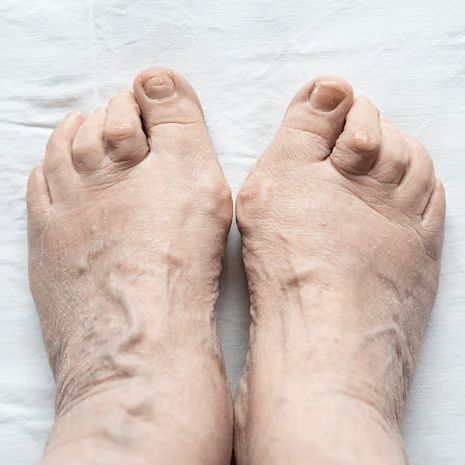
A hammer toe is a deformity where one of the lesser toes (most commonly the second, third, or fourth toe) bends abnormally at the proximal interphalangeal (PIP) joint, giving the toe a hammer-like appearance.
Hammer toes may be flexible (the toe can still be straightened manually) or rigid (fixed deformity). Over time, rigid hammer toes often worsen, leading to corns, calluses, footwear irritation, and pain during walking or standing.
At Foot and Ankle Rehabilitation, we provide comprehensive diagnosis and management, targeting both the symptoms and the underlying biomechanical causes to improve comfort and function.
Causes & Risk Factors
Footwear – tight, narrow, or high-heeled shoes that crowd the toes
Biomechanics – flat feet, high arches, or long second metatarsals altering toe loading
Bunions (hallux valgus) – the big toe drifts inward, forcing other toes into abnormal positions
Muscle imbalance – between intrinsic and extrinsic foot muscles, pulling toes into flexion
Arthritis – rheumatoid or osteoarthritis affecting the small toe joints
Neurological conditions – nerve or muscle disorders affecting toe control
Trauma – previous toe injury or poorly healed fracture
Age – more common in adults, particularly women, due to footwear and ligament laxity
Treatment at Foot and Rehabilitation
Footwear advice – recommending shoes with a wide toe box, soft uppers, and low heels
Custom orthotics – correct biomechanics, redistribute pressure, and offload painful areas
Padding & splints – protect corns/calluses, realign toes in flexible cases
Exercise therapy – strengthening intrinsic foot muscles, stretching tight tendons
Manual therapy & mobilisation – improve joint mobility in flexible hammer toes
Callus and corn care – professional podiatry treatment for pain relief
Shockwave therapy – in chronic cases with associated soft tissue pain
Referral for surgery – if pain persists or deformity is severe, surgical correction may involve tendon release, joint fusion, or bone realignment
Symptoms
Visible bending of one or more toes at the middle joint
Pain or aching on the top of the toe from shoe pressure
Corns or calluses forming on the top or tip of the toe, or under the ball of the foot
Redness, swelling, or inflammation around the affected toe
Stiffness or inability to fully straighten the toe in rigid cases
Difficulty finding comfortable footwear
Secondary pain in the ball of the foot (metatarsalgia)
Diagnosis
At Foot and Ankle Rehabilitation, diagnosis includes:
Clinical examination – toe flexibility, alignment, callus/corn distribution
Biomechanical analysis – gait assessment, arch mechanics, metatarsal length patterns
Footwear review – checking contribution of shoe shape and fit
Imaging (if needed):
X-rays – to evaluate joint alignment, deformity severity, and arthritis
Contact us to learn more about Hammer Toes treatment
If you are dealing with Hammer Toes, our team can help you find the most suitable Foot and Ankle Rehabilitation clinic for assessment, diagnosis, and treatment support.
Whether your symptoms are affecting walking, running, exercise, or daily comfort, we can guide you towards the right clinician and the right next step for your care.
Treatment options are available across Pinehill, Smales Farm, Remuera, Botany, Hamilton East, Hamilton Central and Bethlehem

Podiatrist pricing and availability
Pricing for Hammer Toes assessment and treatment can vary depending on your consultation, the severity of your symptoms, the treatment approach recommended, and whether ongoing podiatry or rehabilitation care is required.
Your Foot and Ankle Rehabilitation clinician will assess your tendon, identify the contributing factors to your pain, and explain the most appropriate treatment plan based on your symptoms, activity level, and recovery goals.
To learn more about our podiatrists and current pricing, use the links below:
10,000+
Appointments delivered across our clinics, helping patients improve foot health, mobility, and long-term outcomes.
7 Clinics
Conveniently located across Auckland, Hamilton, and Tauranga, making it easy to access a podiatrist near you.
30+ Treatments
Comprehensive podiatry services including fungal nail care, ingrown toenail treatment, rehabilitation, and general foot care.
Hammer Toes – FAQs
What is a hammer toe?
A hammer toe is a deformity where the toe bends downward at the middle joint, giving it a hammer-like appearance.
What causes hammer toes?
They are caused by footwear pressure, biomechanical imbalance, bunions, arthritis, or muscle imbalance in the foot.
Are hammer toes painful?
Yes. They often cause pain, corns, calluses, and footwear irritation, especially in rigid cases.
Can hammer toes be corrected without surgery?
Flexible hammer toes can be managed with orthotics, footwear changes, splints, and exercises. Rigid deformities usually require surgery if painful.
Do orthotics help hammer toes?
Yes. Orthotics redistribute pressure, support the arch, and reduce strain, preventing progression and reducing pain.
What shoes are best for hammer toes?
Shoes with a wide toe box, soft uppers, and cushioning are best. Avoid narrow, pointed, or high-heeled shoes.
Can exercises fix hammer toes?
Exercises may help in flexible hammer toes, strengthening intrinsic muscles and maintaining mobility. They cannot reverse a rigid deformity but may reduce pain.
When is surgery needed for hammer toes?
Surgery is considered if:
Pain is persistent despite conservative treatment
Corns/calluses are severe
Deformity is rigid and worsening
Walking and footwear are significantly limited
Are hammer toes linked to bunions?
Yes. Bunions often push adjacent toes out of alignment, contributing to hammer toe deformity.
Can hammer toes come back after surgery?
Yes. Recurrence is possible if underlying biomechanics are not addressed. Post-surgical orthotics and footwear modification help prevent recurrence.

Why Choose Foot and Ankle Rehabilitation?
Foot and Ankle Rehabilitation provides specialist hammer toe care, integrating podiatry and physiotherapy expertise. We focus on conservative management with orthotics, footwear optimisation, and exercise therapy, and coordinate surgical referral when necessary.