Hallux Limitus / Rigidus Treatment at Foot and Ankle Rehabilitation
Reduced or lost big toe motion drives painful push-off and compensations across the forefoot.
At Foot and Ankle Rehabilitation, we protect the joint with orthotics and rocker footwear, maintain motion where possible, and use targeted rehab. For advanced cases, we coordinate imaging and surgical pathways such as cheilectomy or fusion.
What is Hallux Limitus / Rigidus?
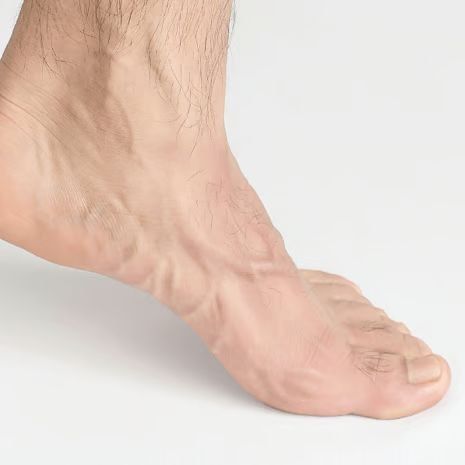
Hallux limitus refers to reduced motion at the big toe joint (first metatarsophalangeal joint), while hallux rigidus is the advanced stage where the joint becomes stiff or fused. Both conditions are forms of arthritis of the big toe joint and are a common cause of forefoot pain and restricted push-off in gait.
The big toe joint plays a critical role in propulsion. Loss of motion leads to altered biomechanics, secondary forefoot overload, and gait compensation, often contributing to metatarsalgia or midfoot strain.
At Foot and Ankle Rehabilitation, we provide specialist diagnosis and treatment, aiming to preserve motion, relieve pain, and restore function.
Causes & Risk Factors
Osteoarthritis – degenerative cartilage wear and joint narrowing
Previous trauma – stubbing, turf toe, or fractures leading to post-traumatic arthritis
Repetitive overload – especially in runners, footballers, and dancers
Biomechanical factors – long or elevated first metatarsal, hallux valgus, flat feet, cavus feet
Systemic arthritis – rheumatoid arthritis, gout, psoriatic arthritis
Genetic predisposition – family history of early big toe arthritis
Footwear factors – restrictive shoes increasing dorsal impingement
Treatment at Foot and Rehabilitation
Custom orthotics – offload the big toe joint and redistribute load to reduce pain
Footwear prescription – stiff-soled or rocker shoes to minimise joint motion
Padding or carbon fibre inserts – limit painful dorsiflexion during gait
Exercise therapy – calf stretching, intrinsic strengthening, mobility strategies (where some motion is preserved)
Manual therapy & mobilisation – to maintain motion in early hallux limitus
Shockwave therapy – for associated soft tissue pain
Pain management – activity modification, pacing, and offloading techniques
Referral – for medical or surgical input where conservative care is insufficient
Surgical options (via orthopaedic referral):
Cheilectomy – removal of dorsal osteophytes to restore motion (for early limitus)
Osteotomy – realignment procedure in select cases
Fusion (arthrodesis) – gold standard for severe rigidus
Joint replacement – considered in some cases but less durable than fusion
Symptoms
Pain and stiffness in the big toe joint, especially during push-off
Reduced range of motion (particularly dorsiflexion)
Swelling, tenderness, or bony enlargement around the joint
Difficulty with activities requiring toe bend (running, squatting, climbing stairs)
Hard bump on top of the joint (dorsal osteophyte)
Secondary pain under the ball of the foot (transfer metatarsalgia)
In severe cases: near-total loss of motion (hallux rigidus)
Diagnosis
At Foot and Ankle Rehabilitation, diagnosis includes:
Clinical examination – range of motion, joint tenderness, crepitus, osteophytes
Biomechanical analysis – gait, foot type, loading pattern, compensations
Imaging:
X-ray – confirms arthritis, joint space narrowing, osteophytes, subchondral sclerosis
MRI – when soft tissue contribution or early arthritis suspected
Ultrasound – to evaluate synovitis or joint effusion
Contact us to learn more about Sesamoiditis treatment
If you are dealing with Hallux Limitus / Rigidus, our team can help you find the most suitable Foot and Ankle Rehabilitation clinic for assessment, diagnosis, and treatment support.
Whether your symptoms are affecting walking, running, exercise, or daily comfort, we can guide you towards the right clinician and the right next step for your care.
Treatment options are available across Pinehill, Smales Farm, Remuera, Botany, Hamilton East, Hamilton Central and Bethlehem
Podiatrist pricing and availability
Pricing for Hallux Limitus / Rigidus assessment and treatment can vary depending on your consultation, the severity of your symptoms, the treatment approach recommended, and whether ongoing podiatry or rehabilitation care is required.
Your Foot and Ankle Rehabilitation clinician will assess your tendon, identify the contributing factors to your pain, and explain the most appropriate treatment plan based on your symptoms, activity level, and recovery goals.
To learn more about our podiatrists and current pricing, use the links below:
10,000+
Appointments delivered across our clinics, helping patients improve foot health, mobility, and long-term outcomes.
7 Clinics
Conveniently located across Auckland, Hamilton, and Tauranga, making it easy to access a podiatrist near you.
30+ Treatments
Comprehensive podiatry services including fungal nail care, ingrown toenail treatment, rehabilitation, and general foot care.
Hallux Limitus / Rigidus – FAQs
What is the difference between hallux limitus and hallux rigidus?
Hallux limitus means partial loss of motion, while hallux rigidus is the advanced stage with near or complete stiffness due to arthritis.
What causes hallux rigidus?
The main cause is arthritis of the big toe joint, either from natural wear (osteoarthritis), trauma, or systemic inflammatory conditions.
What are the symptoms?
Pain, stiffness, swelling, and difficulty bending the big toe during walking or running are common. A bony bump on top of the joint is often present.
Can orthotics help hallux rigidus?
Yes. Orthotics with first ray cut-outs, stiffening plates, or rocker soles can offload the joint and reduce pain.
What shoes are best for hallux rigidus?
Supportive shoes with stiff soles, rockers, and wide toe boxes are recommended. Minimalist shoes or high heels should be avoided.
Do exercises help hallux limitus?
Yes, in early stages. Stretching, strengthening, and joint mobilisation may maintain some motion. In rigidus, exercises focus on compensatory strength and flexibility.
Is surgery always required?
No. Many patients respond to conservative care. Surgery is reserved for severe pain, deformity, or total loss of motion unresponsive to podiatry management.
What is a cheilectomy?
It is a surgical procedure where bone spurs (osteophytes) on top of the joint are removed, restoring some movement in early disease.
What is the gold standard surgery for hallux rigidus?
Fusion (arthrodesis) of the first MTP joint is the most reliable option for severe cases, eliminating pain and providing stability.
When should I see a podiatrist?
If you have persistent big toe joint pain, stiffness, swelling, or footwear difficulty, early assessment is recommended. Conservative management is most effective in the early stages.

Why Choose Foot and Ankle Rehabilitation?
Foot and Ankle Rehabilitation provides specialist care for hallux limitus and rigidus, integrating podiatry and physiotherapy expertise. We combine orthotics, footwear optimisation, mobilisation, and shockwave therapy to manage symptoms and delay progression. Where surgery is required, we coordinate referral and post-operative rehabilitation.