Ankle Arthritis Treatment at Foot and Ankle Rehabilitation
Ankle arthritis causes pain, stiffness, and reduced mobility, often following injury or wear and tear.
At Foot and Ankle Rehabilitation, we provide podiatry and physiotherapy care—using orthotics, footwear modification, rehabilitation, and mobility programs to relieve pain and restore function.
What is Ankle Arthritis?
Ankle arthritis is the degeneration of cartilage within the ankle joint (tibiotalar joint), leading to pain, stiffness, swelling, and reduced mobility. Unlike hip and knee arthritis, ankle arthritis is less common but often more debilitating due to the joint’s critical role in gait.
Arthritis may develop gradually with osteoarthritis (wear-and-tear changes) or occur more rapidly following trauma, such as repeated ankle sprains or fractures. Inflammatory conditions such as rheumatoid arthritis or gout can also damage the ankle joint.
At Foot and Ankle Rehabilitation, we provide specialist care to reduce pain, improve mobility, and slow progression, ensuring patients maintain function and independence.
Causes & Risk Factors
Post-traumatic arthritis – previous ankle fractures or repeated ligament injuries
Osteoarthritis – age-related cartilage degeneration
Inflammatory arthritis – rheumatoid arthritis, psoriatic arthritis, ankylosing spondylitis
Gout – crystal deposits damaging cartilage
Poor biomechanics – flat feet, high arches, or chronic instability leading to abnormal joint loading
Obesity – increased mechanical stress on the ankle
Family history of arthritis
Treatment at Foot and Rehabilitation
Footwear modification – cushioned, supportive shoes or rocker soles to reduce joint load
Custom orthotics – redistribute pressure and improve biomechanics
Strapping and bracing – support and stabilise the joint
Manual therapy and mobilisation – maintain joint mobility and reduce stiffness
Shockwave therapy – may be used in cases of associated tendon pain
Exercise prescription – calf strengthening, ankle mobility, and low-impact exercise (e.g. cycling, swimming)
Weight management support – reduce load on the joint
Referral for injection therapy (corticosteroid or PRP) in select cases
Surgical referral – for severe arthritis requiring arthroscopy, joint fusion, or ankle replacement
Symptoms
Deep ankle pain, worse with weight-bearing or activity
Morning stiffness or stiffness after sitting
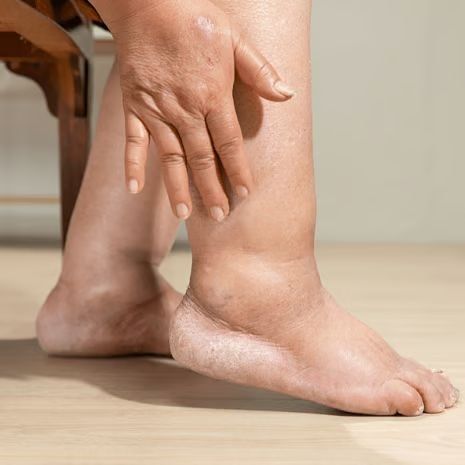
Swelling and warmth around the joint
Reduced range of motion (difficulty pointing or flexing the foot)
Crepitus (grinding sensation)
Pain that worsens on uneven surfaces
In severe cases, deformity or visible joint enlargement
Diagnosis
At Foot and Ankle Rehabilitation, diagnosis is made through:
Clinical history (onset, trauma history, systemic conditions)
Physical examination – range of motion, swelling, tenderness, gait analysis
Imaging:
X-rays – joint space narrowing, bone spurs, subchondral sclerosis
MRI – for early cartilage changes or inflammatory arthritis
Ultrasound – for synovitis or effusion assessment
Contact us to learn more about Ankle arthritis treatment
If you are dealing with Ankle arthritis, our team can help you find the most suitable Foot and Ankle Rehabilitation clinic for assessment, diagnosis, and treatment support.
Whether your symptoms are affecting walking, running, exercise, or daily comfort, we can guide you towards the right clinician and the right next step for your care.
Treatment options are available across Pinehill, Smales Farm, Remuera, Botany, Hamilton East, Hamilton Central and Bethlehem

Podiatrist pricing and availability
Pricing for Ankle arthritis assessment and treatment can vary depending on your consultation, the severity of your symptoms, the treatment approach recommended, and whether ongoing podiatry or rehabilitation care is required.
Your Foot and Ankle Rehabilitation clinician will assess your tendon, identify the contributing factors to your pain, and explain the most appropriate treatment plan based on your symptoms, activity level, and recovery goals.
To learn more about our podiatrists and current pricing, use the links below:
10,000+
Appointments delivered across our clinics, helping patients improve foot health, mobility, and long-term outcomes.
7 Clinics
Conveniently located across Auckland, Hamilton, and Tauranga, making it easy to access a podiatrist near you.
30+ Treatments
Comprehensive podiatry services including fungal nail care, ingrown toenail treatment, rehabilitation, and general foot care.
Ankle Arthritis – FAQs
What causes ankle arthritis?
Ankle arthritis may result from post-traumatic injury (fractures, sprains), age-related wear and tear, or inflammatory conditions such as rheumatoid arthritis and gout. Poor biomechanics and obesity also increase risk.
How is ankle arthritis diagnosed?
Diagnosis involves a combination of clinical examination and imaging. X-rays typically show narrowing of the joint space, osteophytes (bone spurs), or subchondral bone changes.
What are the symptoms of ankle arthritis?
Common symptoms include pain, stiffness, swelling, and reduced mobility. Pain is often worse with weight-bearing and improves with rest. Patients may also notice grinding or clicking in the joint.
Can ankle arthritis be cured?
There is no cure for arthritis, but with specialist care, symptoms can be managed and progression slowed. Conservative treatment focuses on pain relief, mobility restoration, and functional improvement.
What is the best treatment for ankle arthritis?
The best treatment depends on severity but may include:
Orthotics and footwear changes
Strapping or bracing
Strength and mobility programs
Injections (inflammatory arthritis or advanced cases)
Surgery for end-stage arthritis
Is ankle arthritis the same as plantar fasciitis?
No. Plantar fasciitis is soft tissue heel pain, whereas ankle arthritis involves joint cartilage degeneration. Both cause foot and ankle pain but require very different treatments.
Can orthotics help ankle arthritis?
Yes. Orthotics help redistribute pressure, reduce joint strain, and correct poor biomechanics. They are often combined with footwear changes to improve comfort and mobility.
Can I exercise with ankle arthritis?
Yes. Low-impact activities such as cycling, swimming, and strength training are recommended. High-impact activities (running, jumping) may worsen symptoms. Our team prescribes safe, tailored exercise programs.
When should I see a podiatrist for ankle arthritis?
If ankle pain lasts longer than two weeks, limits mobility, or interferes with daily activities, specialist care is recommended. Early treatment prevents further joint deterioration.

Why Choose Foot and Ankle Rehabilitation?
Foot and Ankle Rehabilitation, provides specialist diagnosis and treatment for ankle arthritis, combining podiatry and physiotherapy expertise. Our team offers orthotics, footwear advice, rehabilitation, and access to advanced therapies to reduce pain and restore mobility.