Chronic Ankle Instability Treatment at Foot and Ankle Rehabilitation
If your ankle keeps “giving way,” it may be chronic ankle instability from repeated sprains.
At Foot and Ankle Rehabilitation, we provide specialist care combining strengthening, balance training, orthotics, and rehabilitation to restore confidence and prevent further sprains.
What is Chronic Ankle Instability?
Chronic ankle instability (CAI) is a condition where the ankle repeatedly “gives way” following one or more ankle sprains. It results from a combination of ligament laxity, proprioceptive deficits, and muscular weakness, leading to recurrent sprains, persistent instability, and long-term joint changes.
Without specialist care, CAI can progress to early ankle arthritis, cartilage injury (osteochondral lesions), and permanent loss of stability.
At Foot and Ankle Rehabilitation, we provide specialist-level assessment and rehabilitation for CAI, addressing both the structural ligament damage and the neuromuscular deficits that cause ongoing problems.
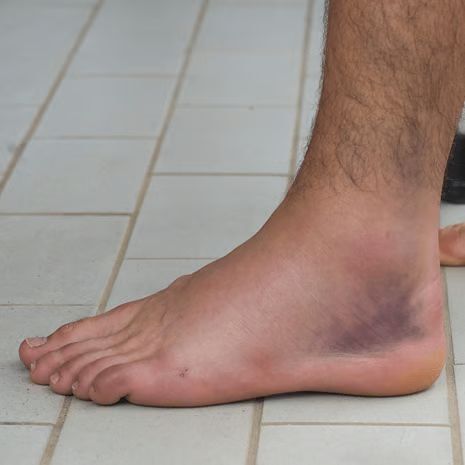
Causes & Risk Factors
History of ankle sprains (most common cause)
Incomplete or poor rehabilitation following an acute sprain
Generalised ligament laxity or hypermobility
Weak peroneal muscles or poor balance
Foot and ankle biomechanics (excessive pronation, cavus foot)
High-risk sports (netball, basketball, football, rugby, trail running)
Poor footwear lacking lateral support
Walking or training on uneven ground
Treatment at Foot and Rehabilitation
Balance and proprioception training – essential for restoring joint control
Strengthening programs – peroneals, calf, and intrinsic foot muscles
Custom orthotics – improve biomechanics and reduce recurrence risk
Functional bracing or strapping – for short-term support in sport
Manual therapy – mobilisation and soft tissue release
Shockwave therapy – in cases of chronic ligament pain or scar tissue
Return-to-sport rehabilitation – progressive, sport-specific drills
Referral to orthopaedics – if surgical ligament reconstruction is required in severe cases
Symptoms
Recurrent ankle sprains, often during sport or daily activity
Sensation of ankle “giving way” or instability
Ongoing ankle pain, swelling, or stiffness after activity
Difficulty with balance and uneven surfaces
Reduced confidence in ankle stability, leading to activity avoidance
Diagnosis
At Foot and Ankle Rehabilitation, diagnosis is made through:
Detailed injury history (number of sprains, mechanism of injury)
Ligament stability testing (ATFL, CFL, PTFL)
Functional strength and balance testing
Gait and biomechanical assessment
Ultrasound or MRI if structural damage or cartilage injury is suspected
Contact us to learn more about Chronic ankle instability treatment
If you are dealing with Chronic ankle instability, our team can help you find the most suitable Foot and Ankle Rehabilitation clinic for assessment, diagnosis, and treatment support.
Whether your symptoms are affecting walking, running, exercise, or daily comfort, we can guide you towards the right clinician and the right next step for your care.
Treatment options are available across Pinehill, Smales Farm, Remuera, Botany, Hamilton East, Hamilton Central and Bethlehem

Podiatrist pricing and availability
Pricing for Chronic ankle instability assessment and treatment can vary depending on your consultation, the severity of your symptoms, the treatment approach recommended, and whether ongoing podiatry or rehabilitation care is required.
Your Foot and Ankle Rehabilitation clinician will assess your tendon, identify the contributing factors to your pain, and explain the most appropriate treatment plan based on your symptoms, activity level, and recovery goals.
To learn more about our podiatrists and current pricing, use the links below:
10,000+
Appointments delivered across our clinics, helping patients improve foot health, mobility, and long-term outcomes.
7 Clinics
Conveniently located across Auckland, Hamilton, and Tauranga, making it easy to access a podiatrist near you.
30+ Treatments
Comprehensive podiatry services including fungal nail care, ingrown toenail treatment, rehabilitation, and general foot care.
Chronic Ankle Instability – FAQs
What is chronic ankle instability?
It is a condition where the ankle repeatedly gives way after sprains. It occurs due to ligament laxity, weakness, and impaired balance, leaving the joint vulnerable to further injury.
Why does my ankle keep rolling after a sprain?
The most common reason is chronic ankle instability. If ligaments heal in a lengthened or weakened state and rehabilitation is incomplete, the ankle loses its ability to stabilise properly.
How is chronic ankle instability different from a single ankle sprain?
A sprain is an acute ligament injury, while chronic instability is a long-term condition involving structural weakness and impaired neuromuscular control.
Can chronic ankle instability cause long-term problems?
Yes. If untreated, CAI increases the risk of:
Recurrent sprains
Osteochondral lesions (cartilage damage inside the ankle joint)
Ankle arthritis due to repetitive joint trauma
How long does it take to recover from chronic ankle instability?
With structured rehabilitation, many patients improve within 8–12 weeks. Severe or longstanding instability may take longer, and some cases may require surgical repair.
What is the best treatment for chronic ankle instability?
The most effective treatments are:
Proprioceptive and balance training
Strengthening of the ankle stabilisers (especially peroneal muscles)
Orthotics to correct biomechanics
Functional bracing during high-risk activity
Do orthotics help with chronic ankle instability?
Yes. Orthotics reduce abnormal movement patterns, control excessive pronation or supination, and improve stability — particularly when combined with strengthening programs.
Do I need surgery for chronic ankle instability?
Most patients respond well to conservative treatment. Surgery (ligament reconstruction) is considered if instability persists despite rehabilitation or if there is severe ligament rupture with mechanical laxity.
Can I play sport with chronic ankle instability?
Yes, but only with correct management. Functional bracing, strapping, and a graded return-to-sport rehabilitation plan reduce the risk of further injury.
When should I see a podiatrist for ankle instability?
If your ankle “gives way” frequently, or if you’ve had two or more sprains in a year, you should seek specialist care. Early intervention prevents long-term complications such as arthritis.

Why Choose Foot and Ankle Rehabilitation?
Foot and Ankle Rehabilitation, provides specialist care for chronic ankle instability, addressing both ligament damage and neuromuscular deficits. Our expert podiatrists and physiotherapists design tailored rehabilitation programs, prescribe orthotics, and use advanced therapies to restore stability and confidence.