Retrocalcaneal Bursitis at Foot and Ankle Rehabilitation
Retrocalcaneal bursitis occurs when the bursa between the heel bone and Achilles tendon becomes irritated or inflamed. It often develops alongside tendon issues or Haglund’s deformity.
At Foot and Ankle Rehabilitation, we provide tailored care including footwear modification, orthotics, shockwave therapy, and rehabilitation strategies to relieve pain and restore function.
What is Retrocalcaneal Bursitis?
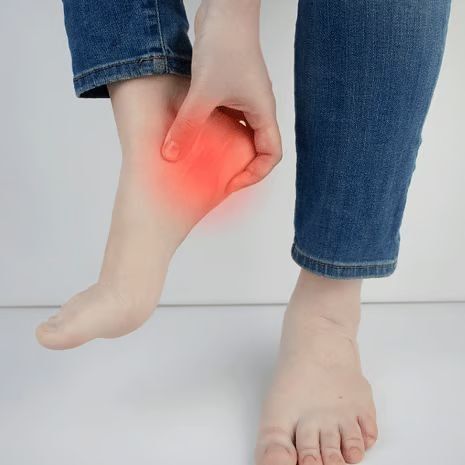
Retrocalcaneal bursitis is inflammation of the bursa located between the Achilles tendon and the heel bone (calcaneus). The bursa acts as a friction-reducing cushion, allowing smooth gliding of the tendon. When repeatedly compressed or irritated, the bursa becomes inflamed, leading to pain and swelling at the back of the heel.
It often develops in conjunction with insertional Achilles tendinopathy or Haglund’s deformity (a bony enlargement of the heel). Patients may experience discomfort with footwear pressure or activities that load the ankle into dorsiflexion, such as climbing stairs or running uphill.
Causes & Risk Factors
Repetitive ankle dorsiflexion (running, jumping, stair climbing)
Poor footwear with rigid or high heel counters
Haglund’s deformity (bony prominence at the back of the heel)
Insertional Achilles tendinopathy
Direct trauma or pressure to the heel
Overuse in running or high-impact sports
Systemic conditions such as inflammatory arthritis
Treatment at Foot and Rehabilitation
Footwear modification – shoes with soft heel counters and cushioned soles
Heel lifts – reduce compressive load on the bursa
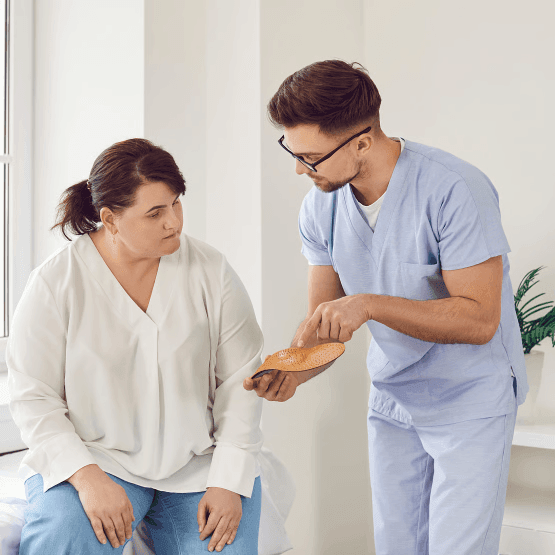
Custom orthotics – correct abnormal biomechanics and offload the tendon–bursa complex
Shockwave therapy (ESWT) – beneficial in chronic cases
Manual therapy and calf stretching – reduce contributing tightness
Strapping and padding – reduce friction from footwear
Referral for corticosteroid injection in resistant cases, used cautiously due to risk of tendon weakening
Surgical referral if bursitis is secondary to a large Haglund’s deformity and fails conservative care
Symptoms
Localised pain and swelling at the back of the heel
Redness and warmth in acute cases
Pain aggravated by uphill walking, running, or tight footwear
Tenderness when squeezing the sides of the heel near the tendon insertion
Discomfort in both activity and rest in more advanced cases
Diagnosis
At Foot and Ankle Rehabilitation, diagnosis is made through:
Clinical history and palpation of the bursa region
Differentiation from insertional Achilles tendinopathy (pain more focal at tendon insertion)
Assessment of footwear and gait mechanics
Ultrasound to confirm fluid in the bursa and rule out tendon involvement
X-ray if Haglund’s deformity is suspected
Contact us to learn more about Retrocalcaneal bursitis treatment
If you are dealing with Retrocalcaneal bursitis, our team can help you find the most suitable Foot and Ankle Rehabilitation clinic for assessment, diagnosis, and treatment support.
Whether your symptoms are affecting walking, running, exercise, or daily comfort, we can guide you towards the right clinician and the right next step for your care.
Treatment options are available across Pinehill, Smales Farm, Remuera, Botany, Hamilton East, Hamilton Central and Bethlehem

Podiatrist pricing and availability
Pricing for Retrocalcaneal bursitis assessment and treatment can vary depending on your consultation, the severity of your symptoms, the treatment approach recommended, and whether ongoing podiatry or rehabilitation care is required.
Your Foot and Ankle Rehabilitation clinician will assess your tendon, identify the contributing factors to your pain, and explain the most appropriate treatment plan based on your symptoms, activity level, and recovery goals.
To learn more about our podiatrists and current pricing, use the links below:
10,000+
Appointments delivered across our clinics, helping patients improve foot health, mobility, and long-term outcomes.
7 Clinics
Conveniently located across Auckland, Hamilton, and Tauranga, making it easy to access a podiatrist near you.
30+ Treatments
Comprehensive podiatry services including fungal nail care, ingrown toenail treatment, rehabilitation, and general foot care.
Retrocalcaneal Bursitis – FAQs
What is retrocalcaneal bursitis?
Retrocalcaneal bursitis is inflammation of the fluid-filled sac behind the Achilles tendon. It causes pain at the back of the heel, especially when wearing shoes or climbing stairs.
What causes bursitis at the heel?
It usually develops from repetitive stress and compression between the Achilles tendon and heel bone. Poor footwear, bony prominences, and associated tendon problems often contribute.
How is retrocalcaneal bursitis different from Achilles tendinopathy?
While both cause heel pain, bursitis involves the bursa (a fluid sac), whereas tendinopathy involves the tendon fibres. Often, the two conditions occur together and require careful differentiation.
How long does retrocalcaneal bursitis take to heal?
Mild cases may resolve within 6–8 weeks with activity and footwear modification. Chronic cases, especially those linked with bony deformities, may take several months and require advanced therapies such as shockwave.
What treatments are most effective?
At Foot and Ankle Rehabilitation, the most effective treatments combine:
Footwear modification and orthotics
Heel lifts to reduce compression
Shockwave therapy in chronic bursitis
Strength and flexibility programs for the calf–Achilles complex
Can orthotics help retrocalcaneal bursitis?
Yes. Orthotics reduce abnormal biomechanical load on the Achilles–bursa interface, particularly in patients with excessive pronation or flat feet.
Should I stop sport if I have bursitis?
A temporary reduction or modification in activity is often necessary to allow recovery. With correct treatment, most patients can return to sport without long-term restriction.
Is surgery ever needed?
In most cases, bursitis resolves with conservative care. Surgery may be considered if bursitis is caused by Haglund’s deformity or in chronic cases that do not respond to orthotics, footwear changes, and therapy.
When should I see a podiatrist for bursitis?
If heel pain persists longer than two weeks, worsens with footwear, or interferes with sport and daily activity, a specialist assessment is recommended to ensure the right diagnosis and treatment.
Why Choose Foot and Ankle Rehabilitation?
Foot and Ankle Rehabilitation provides specialist diagnosis and treatment for retrocalcaneal bursitis, ensuring it is correctly differentiated from tendon pathology. Our team combines podiatry and physiotherapy expertise, offering orthotics, shockwave therapy, footwear prescription, and rehabilitation for long-term outcomes.