Achilles Tendinopathy Treatment at Foot and Ankle Rehabilitation
Achilles tendinopathy causes pain 2–6 cm above the heel due to tendon overload and degeneration. It’s common in runners, athletes, and active adults, often worsened by poor biomechanics or training errors.
At Foot and Ankle Rehabilitation, we combine exercise therapy, shockwave, orthotics, and rehabilitation programs to restore tendon health and get patients back to activity safely.
What is Mid-Portion Achilles Tendinopathy?
Mid-portion Achilles tendinopathy is a degenerative overload condition of the Achilles tendon, typically located 2–6 cm above the heel bone. The tendon undergoes collagen breakdown, disorganisation, and thickening due to repetitive microtrauma. This reduces its ability to tolerate load, resulting in pain and stiffness.
It is not a purely inflammatory process. Instead, it represents a failed healing response, meaning anti-inflammatory medication alone is rarely sufficient. Specialist loading programs and advanced therapies are required to restore tendon health.
Causes & Risk Factors
Repetitive overload at the tendon insertion
Compressive stress from ankle dorsiflexion (uphill running, stair climbing)
Biomechanical factors – flat feet, high arches, restricted ankle mobility
Poor footwear – stiff heel counters, lack of cushioning
Calf tightness – increased strain on the tendon insertion
Age-related degeneration – reduced tendon elasticity and vascularity
Haglund’s deformity – bony enlargement at the back of the heel contributing to irritation
Sports and activity load – common in runners, jumpers, and athletes with repetitive stress
Treatment at Foot and Rehabilitation
Exercise therapy – eccentric loading and heavy-slow resistance programs proven to restore tendon function
Shockwave therapy (ESWT) – stimulates tendon healing in chronic cases
Custom orthotics – correct abnormal biomechanics and reduce tendon strain
Heel lifts – temporary offloading during painful stages
Manual therapy and calf release – improve flexibility and reduce compensatory loading
Footwear modification – cushioned, supportive shoes with slight heel elevation
Return-to-sport planning – structured, graded rehabilitation to prevent recurrence
Symptoms
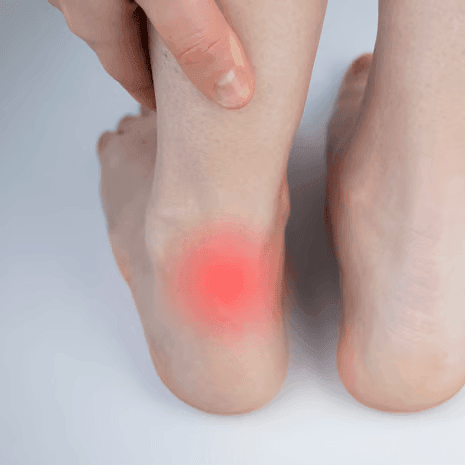
Pain and stiffness at the back of the heel, directly at the tendon’s attachment
Pain aggravated by uphill walking, stairs, or deep squatting
Swelling and tenderness over the tendon insertion
Pain with footwear pressing on the heel
In advanced cases, visible thickening or bony prominence at the heel
Diagnosis
At Foot and Ankle Rehabilitation, diagnosis is made through:
Clinical history and palpation of the tendon insertion
Functional testing (heel raises, stair climbing)
Assessment of calf tightness and ankle range of motion
Footwear and gait analysis
Imaging (ultrasound or X-ray) to confirm tendon degeneration, calcification, or spur formation, and to rule out retrocalcaneal bursitis
Contact us to learn more about Achilles Tendinopathy treatment
If you are dealing with Achilles Tendinopathy, our team can help you find the most suitable Foot and Ankle Rehabilitation clinic for assessment, diagnosis, and treatment support.
Whether your symptoms are affecting walking, running, exercise, or daily comfort, we can guide you towards the right clinician and the right next step for your care.
Treatment options are available across Pinehill, Smales Farm, Remuera, Botany, Hamilton East, Hamilton Central and Bethlehem
Podiatrist pricing and availability
Pricing for Achilles Tendinopathy assessment and treatment can vary depending on your consultation, the severity of your symptoms, the treatment approach recommended, and whether ongoing podiatry or rehabilitation care is required.
Your Foot and Ankle Rehabilitation clinician will assess your tendon, identify the contributing factors to your pain, and explain the most appropriate treatment plan based on your symptoms, activity level, and recovery goals.
To learn more about our podiatrists and current pricing, use the links below:
10,000+
Appointments delivered across our clinics, helping patients improve foot health, mobility, and long-term outcomes.
7 Clinics
Conveniently located across Auckland, Hamilton, and Tauranga, making it easy to access a podiatrist near you.
30+ Treatments
Comprehensive podiatry services including fungal nail care, ingrown toenail treatment, rehabilitation, and general foot care.
Achilles tendinopathy -
Frequently Asked Questions
What is the difference between tendinopathy and tendonitis?
“Tendonitis” suggests acute inflammation, while Achilles tendinopathy is usually a degenerative tendon condition rather than a purely inflammatory one. That is why anti-inflammatory medication alone is often not enough, and treatment focuses more on improving tendon strength, load tolerance, and healing capacity.
How long does Achilles tendinopathy take to heal?
With early treatment and the right loading programme, many patients begin improving within 8 to 12 weeks. More persistent or chronic cases may take 3 to 6 months or longer, depending on severity and compliance with treatment.
What are the best exercises for Achilles pain?
The most effective exercises are usually eccentric loading or heavy-slow resistance programmes designed to improve tendon strength and tolerance to load. These should be prescribed and progressed properly to avoid making symptoms worse.
Can I keep running with Achilles tendinopathy?
Some patients can continue running if symptoms are mild and load is carefully managed. However, training may need to be modified or reduced for a period of time while the tendon settles and rehabilitation begins.
Is shockwave therapy effective?
Yes. Shockwave therapy has good evidence for chronic Achilles tendinopathy and is often used to help stimulate healing, improve pain, and support recovery when combined with exercise therapy and other treatment strategies.
Do orthotics help with Achilles tendinopathy?
Yes. Orthotics can help reduce abnormal foot mechanics that may be increasing strain on the Achilles tendon. They are often used alongside strengthening, footwear advice, and rehabilitation for better long-term outcomes.
What are the risk factors for Achilles tendinopathy?
Common risk factors include poor biomechanics, calf tightness, sudden increases in training, poor footwear, age-related tendon change, obesity, diabetes, and some medications such as fluoroquinolones or corticosteroids.
Can Achilles tendinopathy heal without treatment?
Some mild cases may settle with reduced activity, but recurrence is common if the underlying causes are not addressed. Proper treatment helps improve tendon function and reduce the risk of the condition returning.
When should I see a podiatrist?
If your Achilles pain lasts more than two weeks, worsens with activity, or starts affecting walking, exercise, or daily function, it is best to seek assessment early to avoid longer-term problems.
Our approach to Achilles Tendinopathy
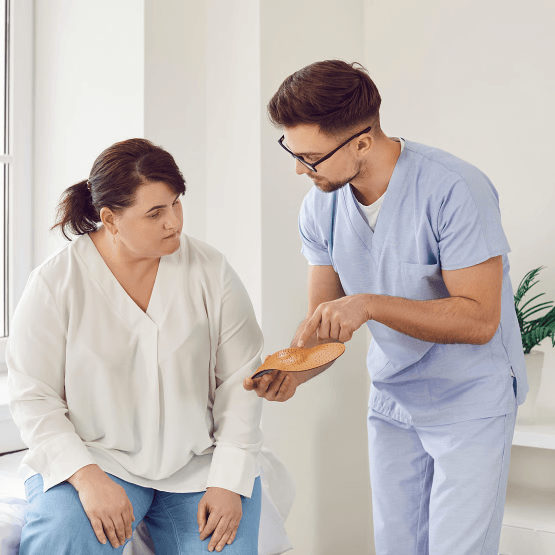
At Foot and Ankle Rehabilitation, our approach to Achilles Tendinopathy begins with a thorough assessment to confirm the diagnosis, identify contributing factors, and understand how the tendon is responding to load.
Once we have identified the cause of your pain, we create a personalised treatment plan focused on reducing symptoms, restoring tendon capacity, and improving long-term function. Depending on your presentation, treatment may include exercise therapy, shockwave therapy, custom orthotics, heel lifts, manual therapy, footwear modification, and a structured return-to-activity or return-to-sport plan.
Our goal is not just to calm the pain, but to improve tendon health, reduce the risk of recurrence, and help you return to daily activity, exercise, and sport with greater confidence.