Hip Impingement & Labral Pathology Treatment at Foot and Ankle Rehabilitation
Hip impingement occurs when the hip joint bones pinch together, often causing stiffness, groin pain, and labral tears. Poor foot mechanics can worsen this by altering pelvic tilt and hip loading.
At Foot and Ankle Rehabilitation, we improve hip health from the ground up with orthotics, footwear optimisation, and gait retraining. Our care reduces stress on the joint and supports long-term function.
What is Hip Impingement &
Labral Pathology?
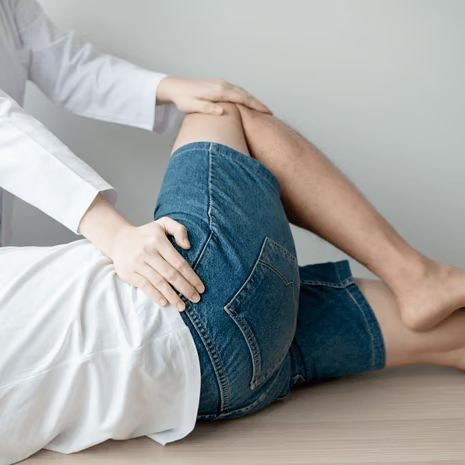
Hip impingement (femoroacetabular impingement, FAI) occurs when the bones of the hip joint are shaped in a way that causes abnormal contact between the femur and the acetabulum (hip socket). This leads to restricted movement, pain, and sometimes tearing of the labrum (the cartilage ring around the socket that stabilises the joint).
While the structural changes occur at the hip, symptoms are often influenced by the way the feet and legs move. Flat feet, excessive pronation, or leg length differences can alter pelvic tilt and hip loading, worsening impingement symptoms and labral strain.
At Foot and Ankle Rehabilitation, we address these foot-driven mechanics with orthotics, footwear optimisation, and gait retraining, reducing stress on the hip joint and supporting long-term function.
Causes & Risk Factors
Structural bone changes – cam (extra bone on femoral head) or pincer (extra bone on hip socket) impingement
Excessive pronation or flat feet – increasing pelvic tilt and rotational hip stress
Leg length discrepancy – uneven hip loading over time
High arches (cavus feet) – poor shock absorption transmitting higher loads to the hip
Repetitive hip flexion sports – football, hockey, netball, dance, martial arts
Previous injuries – hip, pelvis, or lower limb trauma
Genetics – some people are predisposed to abnormal bone shapes
Treatment at Foot and Rehabilitation
Foot & Biomechanical Correction
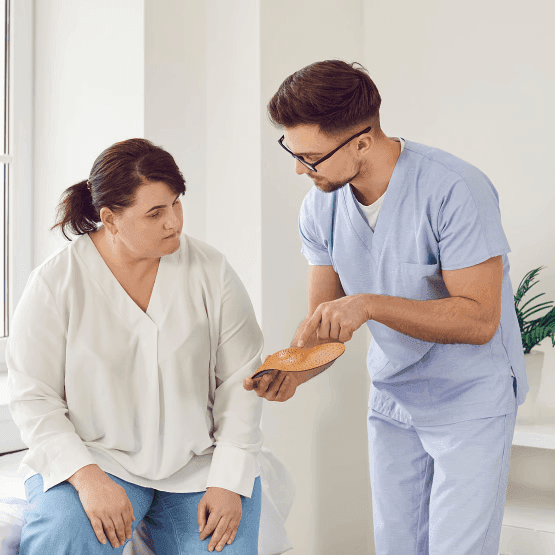
Custom orthotics – reduce pronation, improve alignment, and reduce hip stress
Heel lifts – for leg length discrepancies causing pelvic tilt
Footwear advice – supportive, cushioned shoes to improve shock absorption
Load & Activity Management
Modifying training to reduce repetitive deep hip flexion movements
Avoiding positions that aggravate impingement (e.g., deep squats)
Rehabilitation
Referral to physiotherapy for:
Hip and core strengthening
Gluteal activation for pelvic stability
Controlled mobility work to restore safe hip movement
Adjunct Therapies
Shockwave therapy may help with associated soft tissue pain
Manual therapy – soft tissue release for surrounding muscles
Surgical referral – for persistent impingement or significant labral tears requiring arthroscopy
Symptoms
Pain deep in the groin or outer hip during activity
Stiffness or reduced range of motion in the hip
Clicking, catching, or locking sensations (labral tear)
Pain worsens with squatting, twisting, or prolonged sitting
Referred pain into the thigh, buttock, or knee
Weakness or instability in advanced cases
Diagnosis
At Foot and Ankle Rehabilitation, diagnosis includes:
Comprehensive biomechanical assessment – foot posture, leg alignment, and gait analysis
Functional testing – squats, single-leg stance, hip impingement tests (FADIR)
Differential diagnosis – excluding bursitis, groin strain, or lumbar spine referral
Referral for imaging – MRI (to detect labral tears) or X-ray (to confirm cam/pincer morphology)
Contact us to learn more about Hip Impingement &
Labral Pathology treatment
If you are dealing with Hip Impingement & Labral Pathology, our team can help you find the most suitable Foot and Ankle Rehabilitation clinic for assessment, diagnosis, and treatment support.
Whether your symptoms are affecting walking, running, exercise, or daily comfort, we can guide you towards the right clinician and the right next step for your care.
Treatment options are available across Pinehill, Smales Farm, Remuera, Botany, Hamilton East, Hamilton Central and Bethlehem

Podiatrist pricing and availability
Pricing for Hip Impingement & Labral Pathology assessment and treatment can vary depending on your consultation, the severity of your symptoms, the treatment approach recommended, and whether ongoing podiatry or rehabilitation care is required.
Your Foot and Ankle Rehabilitation clinician will assess your tendon, identify the contributing factors to your pain, and explain the most appropriate treatment plan based on your symptoms, activity level, and recovery goals.
To learn more about our podiatrists and current pricing, use the links below:
10,000+
Appointments delivered across our clinics, helping patients improve foot health, mobility, and long-term outcomes.
7 Clinics
Conveniently located across Auckland, Hamilton, and Tauranga, making it easy to access a podiatrist near you.
30+ Treatments
Comprehensive podiatry services including fungal nail care, ingrown toenail treatment, rehabilitation, and general foot care.
Hip Impingement &
Labral Pathology – FAQs
Can foot problems contribute to hip impingement?
Yes. Flat feet or excessive pronation can rotate the leg inward, altering hip joint mechanics and worsening impingement.
How do orthotics help hip pain?
Orthotics improve alignment, reducing abnormal rotational stress at the hip joint and improving pelvic balance.
Can labral tears heal on their own?
Minor tears may settle with conservative care, but significant tears often persist and may require surgery.
Is hip impingement the same as arthritis?
No. Impingement is abnormal contact of bone leading to labral/cartilage damage, while arthritis is progressive joint degeneration.
Can shockwave therapy help hip impingement?
Shockwave may help with secondary soft tissue pain, but the primary management is biomechanics and rehab.
Can podiatrists treat hip pain?
Yes. Podiatrists treat the foot mechanics that drive hip stress, often a key factor in hip impingement symptoms.
When should I see a podiatrist?
If hip pain is persistent, aggravated by walking, or worsens by activity despite rest, podiatry assessment is recommended.
Why Choose Foot and Ankle Rehabilitation?
Foot and Ankle Rehabilitation, we approach hip impingement and labral pathology from the ground up. By correcting foot mechanics, footwear, and gait, we reduce abnormal stress on the hip and support long-term joint health.